AI Brand Avatars for Cross-Border Market Entry
Entering a new market without a local team is hard. Studio shoots are expensive, content production stalls across time zones, and your brand voice fragments across platforms. Axia produces on-brand content at scale using approved avatar personas — so your presence stays consistent across markets, languages, and channels, without the production overhead.
A typical SME content engine runs on shoot cycles — schedule the studio, brief the talent, edit the footage, then redo it for the next market. An avatar persona collapses that cycle into a single approved build, with every subsequent piece generated from the same persona without re-shooting.
The Cross-Border Content Problem
Most SMEs entering a new market hit the same wall. The marketing playbook that worked at home does not scale to a new region without a local team, and hiring one before there is revenue to support it is a slow and expensive move.
The specific failures show up like this:
- Production cost. Studio shoots, fixer fees, and travel for each campaign add up fast. Costs that were marginal at home become structural in a new market.
- Content scale. Daily LinkedIn presence, video shorts, and platform-specific formats need volume. A small team in another time zone cannot keep up.
- Voice consistency. Different freelancers, different agencies, different translators — the brand voice drifts. By the time anyone notices, the positioning has been diluted.
- Multilingual reach. Cantonese, Mandarin, English. SEA languages. Each one adds production cost and risks losing brand tone.
An on-brand avatar persona, deployed through an AI system that runs daily, removes most of this — content stays consistent across markets and platforms, production cost drops by 60-80% versus traditional shoots, and the avatar can speak in multiple languages without rehiring.
How Axia Produces Avatar-Led Content
The avatar is not the product. It is one of several content production levers inside Axia, our AI operating system for sales and marketing. The full sequence runs four phases:
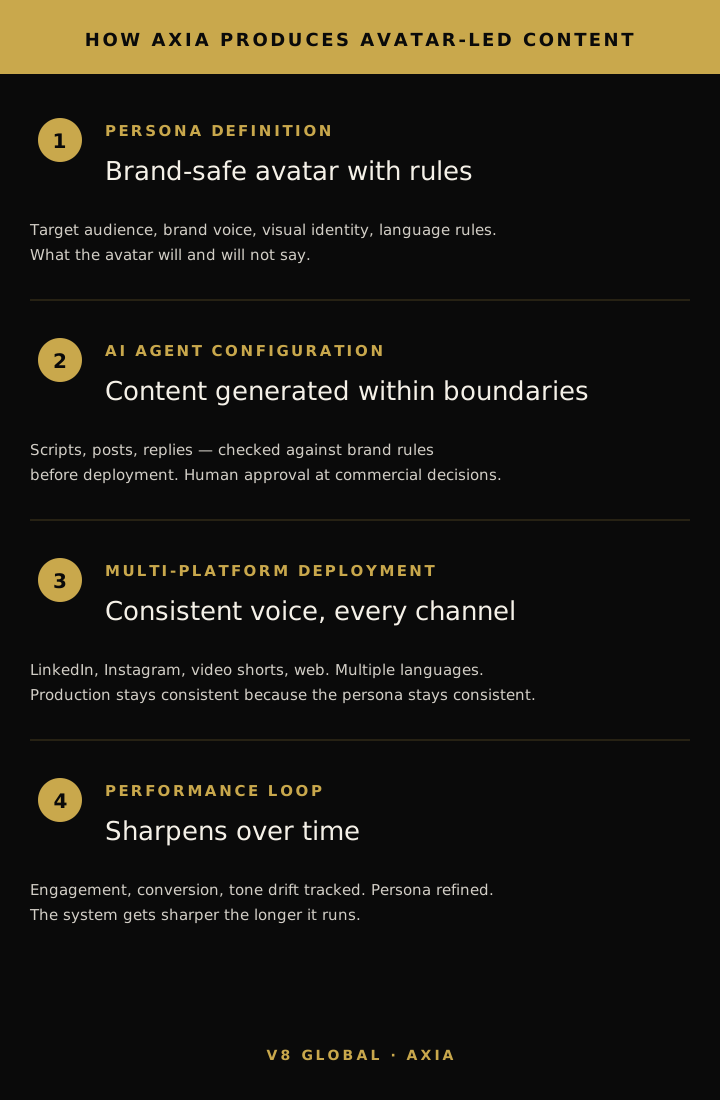
- Persona definition. We design the avatar around your target audience and brand voice — backstory, visual identity, language rules, what the avatar will and will not say. This is the layer that protects your brand.
- AI agent configuration. Axia's content agents generate scripts, posts, and replies within the persona's approved boundaries. Every output is checked against the brand rules before it ships.
- Multi-platform deployment. Content goes to LinkedIn, Instagram, video shorts, web — in the languages and formats each platform needs. Production stays consistent because the persona stays consistent.
- Performance loop. Axia tracks engagement, conversion, and tone drift, and refines the persona over time. The system gets sharper the longer it runs.
Human approval sits at every commercial decision. The avatar runs; you stay in control.
Why Avatars Live Inside Axia, Not as a Standalone Service
Plenty of vendors will sell you an AI avatar as a product. The problem is what happens next. A static avatar with no operating system around it is a video file. It produces nothing on its own, it does not track performance, and it does not adapt as the market shifts.
Axia is the operating layer. The avatar is one capability the system uses to produce content. You also get pipeline management, email intelligence, follow-up monitoring, and outreach — the full commercial machinery of a sales and marketing function, running daily with human approval at every commercial decision.
For SMEs entering a new market, this is the right shape. You do not need to hire a marketing team in the new region. You do not need to commission monthly studio shoots. You do not need to manage five freelancers across three time zones. Axia runs it.